
I wrote this post because I wanted to be able to give a better answer to the two of you who asked me these questions respectively! I did some research and found a few things.
Tides are caused by the gravitational pull of the moon and to a much lesser extent, the sun. They’re actually in phase with the lunar day instead of the solar day, so it’s on a 24 hour and 50 minute cycle [1, 2]. As the earth rotates around its axis, the distance between a location and the moon’s gravity changes and this change leads to higher and lower tides as water in the oceans is pulled towards the moon.
The moon’s gravity is strongest along a perpendicular axis, as shown in the diagram with the red arrows.
When a point on earth rotates to line up with that axis, a high tide occurs.

Further reading about tides:
[1] NOAA (has a great gif illustrating it)!
[2] SciJinks (more in-depth explanation)
This next question took a little bit more research, since information about it is a little bit inconsistent as well.
The Bermuda Triangle is an area in the Atlantic Ocean where planes and ships have supposedly vanished for uncertain reasons. These are generally attributed to a combination of weather events and human navigational challenges.
According to NOAA, most hurricanes and tropical storms in the Atlantic pass through that area, and additionally one of the major ocean currents (the Gulf Stream) that passes through it can cause [1].
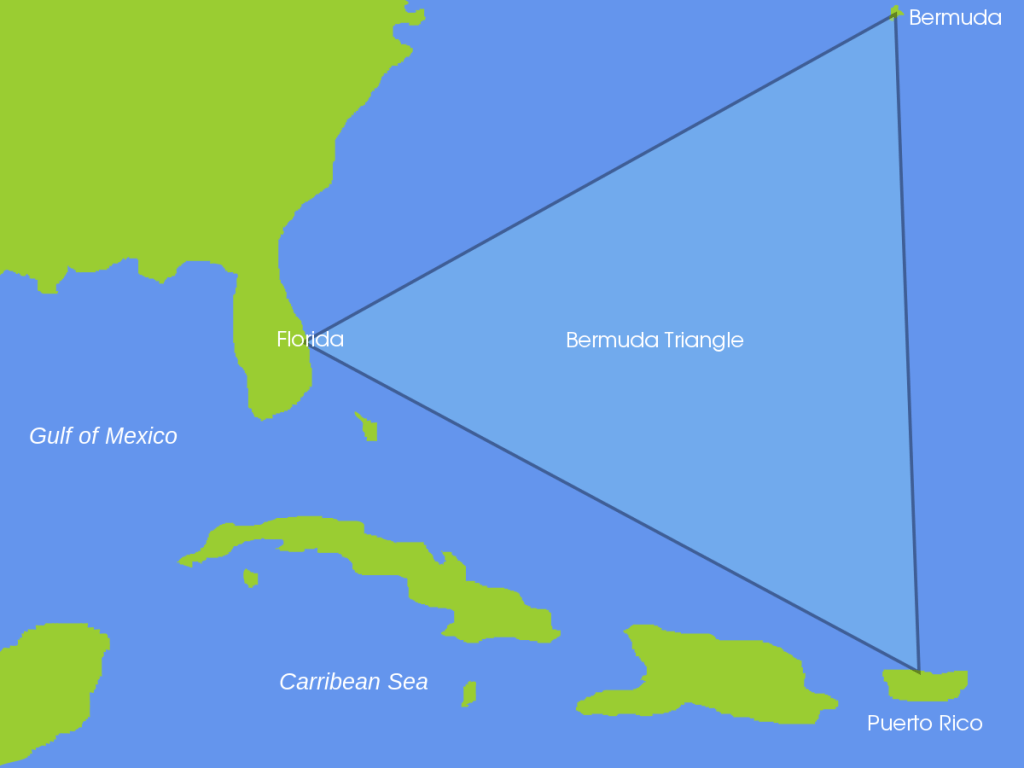
It may also be attributed to unusual weather events like waterspouts [3] or navigation issues with true north and magnetic north in that part of the earth [1, 3]. Additionally, some research has found that the rate of disappearances and accidents occurring in the Bermuda Triangle area isn’t any higher than the rate of disappearances in other parts of the ocean [2].
Further reading about the Bermuda Triangle:
[1] NOAA explanation
[2] Kusche, 1975 – Bermuda Triangle Mystery Solved (I haven’t read this, but I found some sites that quoted this book and it seemed really in depth!)

Image Sources: Siyavula Education – Flickr, Wikimedia Commons


 sleep fish.

Leave a reply to Tiny and Winnie Cancel reply